
In international chemical supply chains, selecting reliable Hypophosphorous Acid exporters is less about commercial availability and more about how safely and consistently the material survives regulatory handling, hazardous freight classification, and long-duration ocean transit without degrading its performance in electroless plating and reduction-based chemical systems.
Unlike simple commodity chemicals, Hypophosphorous Acid introduces a logistical layer of complexity because it is a corrosive liquid typically classified under hazardous material regulations, meaning every stage—from packing to port handling—can influence downstream industrial behavior.
Why Hypophosphorous Acid is a high-friction export chemical
In real-world plating and synthesis environments, Hypophosphorous Acid is used in systems where reduction stability must remain predictable over long operating cycles. That stability can be disrupted even before it reaches the plant if transport conditions are not tightly controlled.
Export logistics typically involve:
-
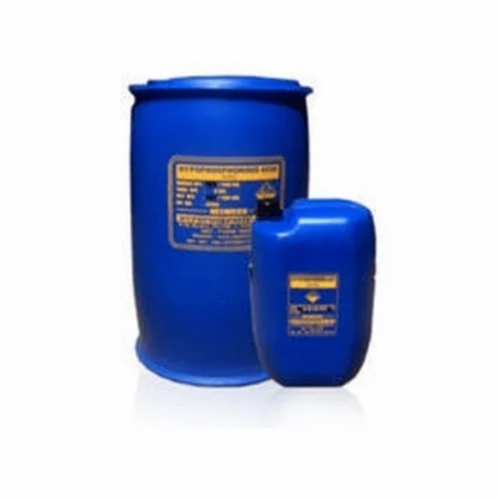
corrosion-resistant HDPE drum packaging designed to prevent container interaction
-
controlled filling limits to avoid thermal expansion stress during sea freight
-
UN-compliant hazmat labeling and documentation (commonly regulated under corrosive liquid classifications)
-
segregation from oxidizers during transport and storage to avoid reaction risk
The biggest operational risk is not chemical degradation in theory—it is small packaging failures, contamination ingress, or temperature cycling during transit, which can subtly alter batch performance in electroless nickel systems once it is introduced into production baths.
In plating operations, even minor inconsistencies can result in:
-
uneven phosphorus distribution in coatings
-
reduced bath stability over extended cycles
-
premature bath decomposition requiring replacement
This is why exporters are evaluated on logistics discipline as much as chemical purity.
Calcium Hypophosphite and moisture-controlled import handling
For Calcium Hypophosphite importers in Europe, the challenge is fundamentally different because the material is a solid hygroscopic powder used in polymer systems, flame retardant formulations, and additive engineering applications where physical stability during transit is just as important as chemical composition.
Unlike corrosive liquids, Calcium Hypophosphite does not require hazardous liquid classification, but it introduces a different constraint: moisture sensitivity during long-distance shipping.
In practical supply chain conditions, importers must manage:
-
moisture-barrier packaging (multi-layer bags or lined fiber drums)
-
humidity exposure control during port storage and inland transport
-
prevention of agglomeration (clumping) that affects dispersion in polymer blending
-
consistency in particle flow behavior for extrusion and compounding systems
Once moisture ingress occurs, the material may not chemically fail—but it becomes difficult to dose, blend, or disperse uniformly, which directly affects flame retardant performance in end-use polymers.
In polymer engineering, that leads to:
-
inconsistent char formation behavior during thermal exposure
-
uneven flame resistance across batches
-
processing instability during extrusion or injection molding
So for European importers, the real procurement concern is not chemical identity—it is physical handling stability across humid logistics environments.
Real separation in global chemical trade logic
The real distinction between these two materials is not geographic—it is physical behavior under transport stress.
-
Hypophosphorous Acid behaves as a hazardous liquid requiring controlled chemical logistics systems
-
Calcium Hypophosphite behaves as a moisture-sensitive solid requiring environmental protection during transport
This difference defines everything in procurement:
-
packaging design
-
freight classification
-
storage protocols
-
batch stability upon arrival
In industrial reality, supply chain performance often determines chemical performance long before the material reaches the reactor or production line.
Procurement reality for global buyers
Experienced industrial buyers rarely evaluate these materials based only on specifications. Instead, they assess:
-
how stable the material remains after transit, not just at dispatch
-
whether packaging prevents environmental contamination during shipping cycles
-
whether the supplier understands hazardous vs non-hazardous handling separation
-
how consistent batch behavior remains after long logistics chains
In global chemical trade, especially across long-haul shipping routes, logistics integrity is effectively part of the product quality.
The bottom line
Hypophosphorous Acid and Calcium Hypophosphite may belong to the same chemical family, but their global trade behavior is defined by completely different physical realities.
One demands strict control of corrosive liquid transport systems.
The other demands strict control of moisture exposure during solid material handling.
For industrial buyers, understanding this difference is what prevents production variability long before the material ever enters the plant.
