

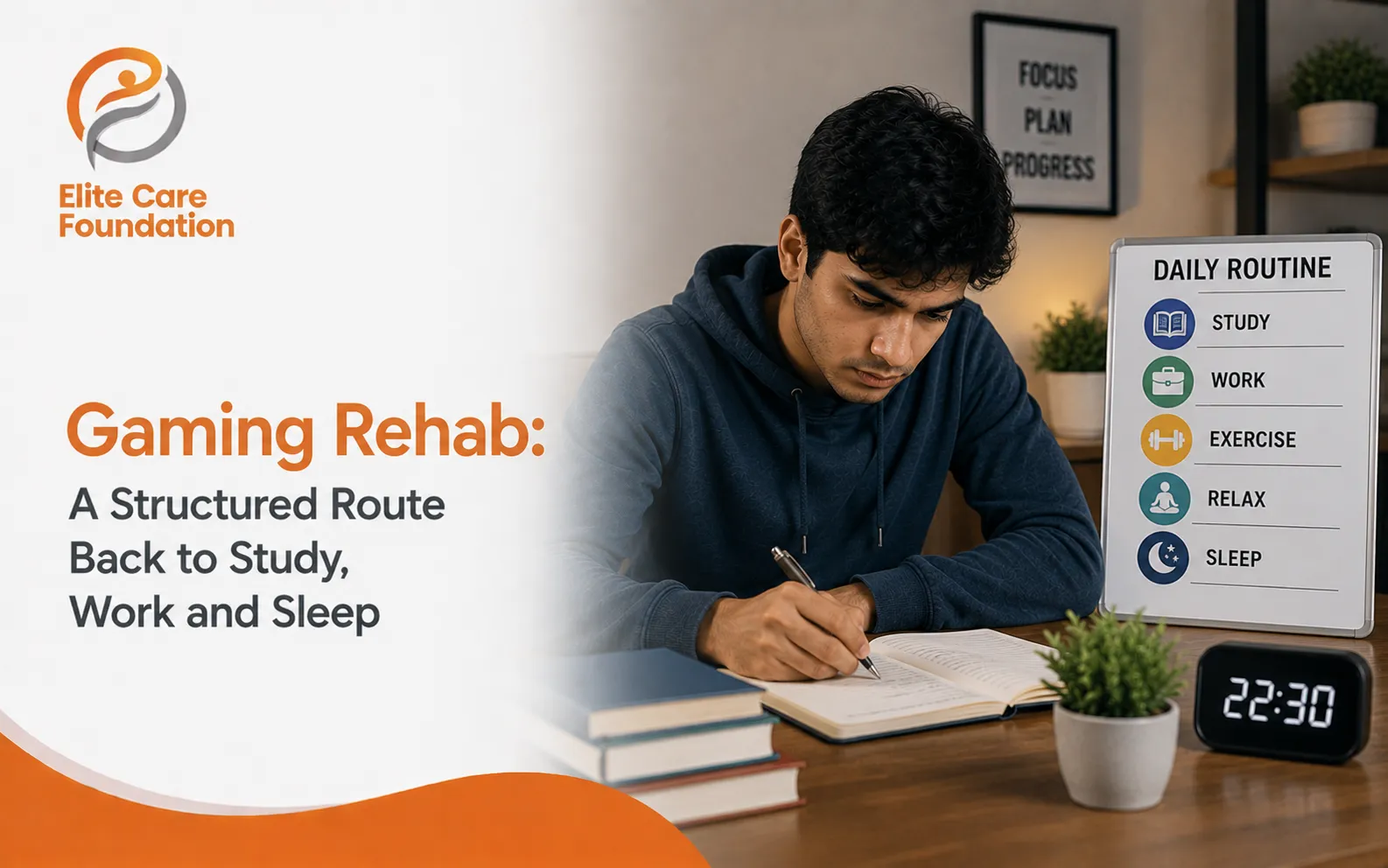
Gaming rehab is considered when repeated attempts to set limits have failed and daily functioning has seriously declined. A person may sleep through the day, miss college or work, stop meeting friends and become highly distressed when play is interrupted. Admission is not required for everyone. The right level of care depends on risk, severity, mental health and support at home.
Assessment before restriction
The first task is to understand the pattern, not simply remove the device. Clinicians review the games played, timing, spending, online relationships, sleep, food, exercise, education and work. They also assess depression, anxiety, attention difficulties, autism-related needs, substance use, aggression and self-harm risk. These factors may drive gaming or make change harder.
The World Health Organization’s ICD-11 describes gaming disorder as impaired control, growing priority given to gaming and continuation despite negative consequences. The harm must be significant and the pattern is normally evident for at least 12 months. Heavy gaming during a holiday or tournament does not automatically meet this threshold.
What a structured programme can do
Early treatment often restores a basic day: a regular waking time, meals, personal care, movement and planned tasks. Therapy can include motivational work, cognitive behavioural methods, emotion regulation and social-skills support. Family sessions help replace daily arguments with clear limits. If gaming involves paid items or gambling-like features, spending controls also need attention.
People searching for the best rehabilitation centre in India should look beyond rankings and promotional claims. The better fit is a service with qualified mental health professionals, a clear assessment process, family involvement, privacy safeguards and follow-up care. Mumbai families should also consider travel, work or study needs and how care will continue after discharge.
Life after discharge
A total ban may be needed briefly in some cases, but long-term plans often teach controlled technology use because computers and phones remain necessary. The plan can define permitted times, excluded games, spending limits, device-free sleep and early warning signs. Return to college or work may need gradual targets. Offline interests must be scheduled and supported until they become rewarding again.
Choosing the right level of care
Outpatient care may suit a person who remains safe, attends work or study and can follow limits at home. Residential care may be considered when the sleep cycle has collapsed, aggression or self-neglect is serious, several addictions occur together, or earlier outpatient plans have repeatedly failed. Admission should have defined goals and a discharge plan. A long stay without preparation for real devices, internet access and family routines can leave the main risks unchanged.
For Mumbai families, follow-up needs to fit travel, college hours and work shifts. Online sessions may support continuity, but they should not become another reason for unrestricted device use. Scheduled appointments and clear access rules help keep treatment purposeful.
Responsible gaming rehab in Mumbai measures progress through functioning, not promises. Improved sleep, attendance, honest communication and the ability to stop at an agreed time are useful signs. Progress reviews should include the patient and family without turning every conversation into surveillance. A lapse is reviewed for triggers and plan gaps. Threats of self-harm, violence, severe neglect or days without sleep require urgent professional assessment.
