

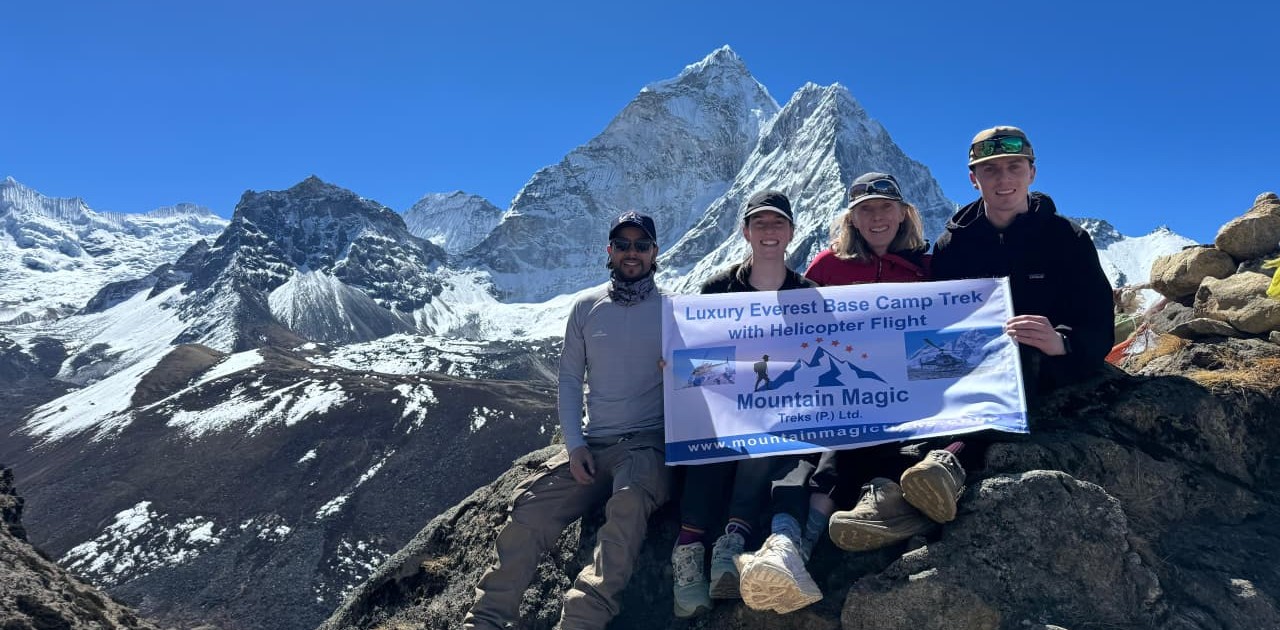
A trip to the Everest region does not have to mean spending many extra days walking the same trail twice. If you want to experience the famous route but have limited vacation time, the way you plan your return matters.
The Everest Base Camp Trek with helicopter return combines several days of trekking with an aerial journey back from the mountains. You walk through the Khumbu region, experience its villages and landscapes, reach Everest Base Camp, and then use a helicopter for the return journey, subject to suitable weather and flight conditions.
This approach can make an Everest adventure more practical without removing the heart of the trekking experience.
Start by Understanding the Journey
Before booking an Everest trek, understand what you are signing up for.
This is a high-altitude walking adventure. The route includes long days, uneven ground, uphill sections, and changing weather.
Know Your Daily Limits
You do not need to be the fastest person on the trail.
In fact, rushing can leave you exhausted when you reach higher elevations.
A steady walking rhythm is more useful.
Take short breaks, drink water, and give yourself time to enjoy the surroundings.
Leave Lukla With Fresh Energy
Lukla is where the walking adventure begins.
The surroundings are greener here, with hills, forests, rivers, and small settlements.
Enjoy the Lower Khumbu
The first part of the route allows you to get used to your backpack and trekking shoes.
You will cross suspension bridges and walk beside mountain rivers.
These early sections may feel easier, but they are important for building a comfortable routine.
Let Namche Change Your Perspective
The route becomes more demanding as you approach Namche Bazaar.
The town sits among steep mountain slopes and offers a mix of local life and trekking facilities.
Do More Than Sleep Here
Namche is an important acclimatization stop.
Use the extra time to take a short hike, explore the town, or rest.
Your body is beginning to adjust to higher elevation, so there is no reason to turn the day into another hard trek.
Follow the Cultural Trail
The Everest route is filled with signs of local culture.
You may pass prayer wheels, mani walls, monasteries, and colorful prayer flags.
Respect the Sacred Places
Do not touch religious objects casually or enter restricted areas.
If you want to take photographs, pay attention to local rules.
A respectful approach makes your visit more meaningful and helps protect the character of the communities you pass through.
Stop and Appreciate Tengboche
Tengboche is known for its monastery and mountain views.
It is one of the places where the cultural and natural sides of the journey come together.
Give Yourself a Quiet Evening
After a long walking day, you may not need another activity.
Sit outside if the weather allows.
Watch the mountains.
Enjoy a warm meal.
The simple moments between major destinations often become some of the strongest memories.
Dingboche Brings Higher Challenges
The route continues toward Dingboche, where the landscape becomes more open.
There are fewer trees, and the surrounding peaks feel much closer.
Expect Slower Walking
As elevation increases, your normal walking speed may not feel comfortable anymore.
That is completely normal.
Short steps and regular breaks can help conserve energy.
If you feel unwell, tell your guide rather than trying to push through it.
Make Food Part of Your Strategy
Trekking burns energy.
Even if you are not very hungry, regular meals and snacks can help you maintain your strength.
Choose Simple, Reliable Food
Meals at mountain lodges are generally designed to provide energy and warmth.
Carry a few easy snacks for the trail.
Do not wait until you are exhausted before eating.
The Everest Base Camp Trek with helicopter return is much easier when you manage your energy throughout the day.
Prepare for the Rocky Upper Route
After Dingboche, the trail becomes increasingly rugged.
The route toward Lobuche has fewer trees and more exposed terrain.
Protect Yourself From the Elements
The sun can feel strong even when the air is cold.
Use sunscreen and sunglasses.
Keep a warm layer and waterproof jacket accessible.
Weather can change quickly in the mountains.
Reach Gorakshep With Patience
Gorakshep is one of the final stops before Everest Base Camp.
At this point, you are walking in a high-altitude environment where even simple uphill sections require more effort.
Stop Comparing Yourself With Others
Another trekker may walk faster than you.
That does not mean you should increase your pace.
Everyone responds to altitude differently.
Stay focused on your own body and follow your guide’s advice.
Change Your Route Home
After completing the trekking portion, you do not have to retrace the entire trail on foot.
The Everest Base Camp Trek with helicopter return gives you the option of returning by helicopter, depending on safe flying conditions.
Turn the Return Into a Highlight
The helicopter ride offers a completely different view of the landscape.
From above, you can see the valleys you walked through from a much wider perspective.
The trail appears tiny.
Villages sit among huge mountain slopes.
Glaciers and ridges become easier to see as parts of one massive landscape.
The return flight can feel like a final reward after days of walking.
Choose Gear That Solves Problems
Expensive equipment is not automatically better.
Your gear should be practical, comfortable, and suitable for changing conditions.
Focus on the Essentials
Before leaving home, make sure your trekking shoes are already broken in.
Also carry:
-
Warm base layers
-
Insulating jacket
-
Waterproof outer layer
-
Gloves
-
Warm hat
-
Sunglasses
-
Sunscreen
-
Water bottle
-
Headlamp
-
Small first-aid supplies
Test your gear before the trek instead of discovering problems in the mountains.
Make Time for the People
It is easy to focus so much on Everest that you forget the people who make the journey possible.
Guides, porters, lodge owners, cooks, and local workers are an important part of the experience.
Have Real Conversations
Ask your guide about the villages you pass.
Learn about local traditions.
Listen to stories about life in the mountains.
These conversations can teach you things that no travel brochure can explain.
Final Thoughts
The Everest Base Camp Trek with helicopter return is a practical way to experience the Everest region when time is limited.
You still get the essential trekking experience. You walk from Lukla through the Khumbu Valley, visit Namche Bazaar and Tengboche, spend time acclimatizing in the higher villages, and continue toward Gorakshep and Everest Base Camp.
You can also experience the views from Kala Patthar before replacing the long return walk with a helicopter journey.
The biggest advantage is not simply speed.
It is the combination of two experiences: seeing the Himalayas from the trail and then watching them unfold from the sky.
Prepare carefully, respect your body’s limits, and leave room for changing weather. If you do that, the journey can be challenging without becoming unnecessarily stressful.
Frequently Asked Questions
What makes the Everest Base Camp Trek with helicopter return different?
You trek through the Everest region to Base Camp and return by helicopter rather than walking the full route back.
Is the trek physically demanding?
Yes. Long walking days, uneven trails, and high altitude require reasonable fitness and preparation.
How should I manage my pace?
Walk slowly and steadily, especially at higher elevations. Take breaks before you become exhausted.
What should I do if I feel unwell?
Tell your guide immediately. Do not ignore unusual symptoms at high altitude.
Why is Kala Patthar popular?
It is a high viewpoint known for broad views of Mount Everest and nearby Himalayan peaks.
Can bad weather affect the helicopter?
Yes. Visibility, clouds, wind, and other weather conditions can cause delays or changes.
Is extra time useful after the trek?
Yes. A flexible schedule is strongly recommended when your travel plans depend on mountain flights.
